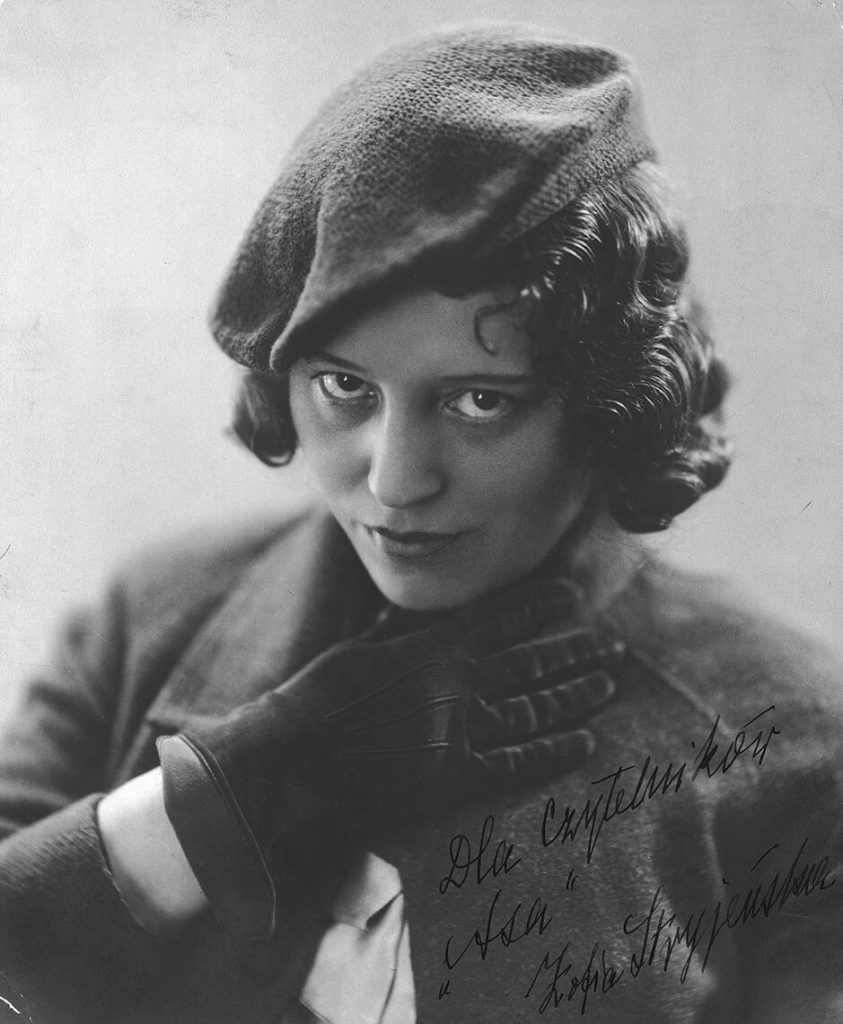
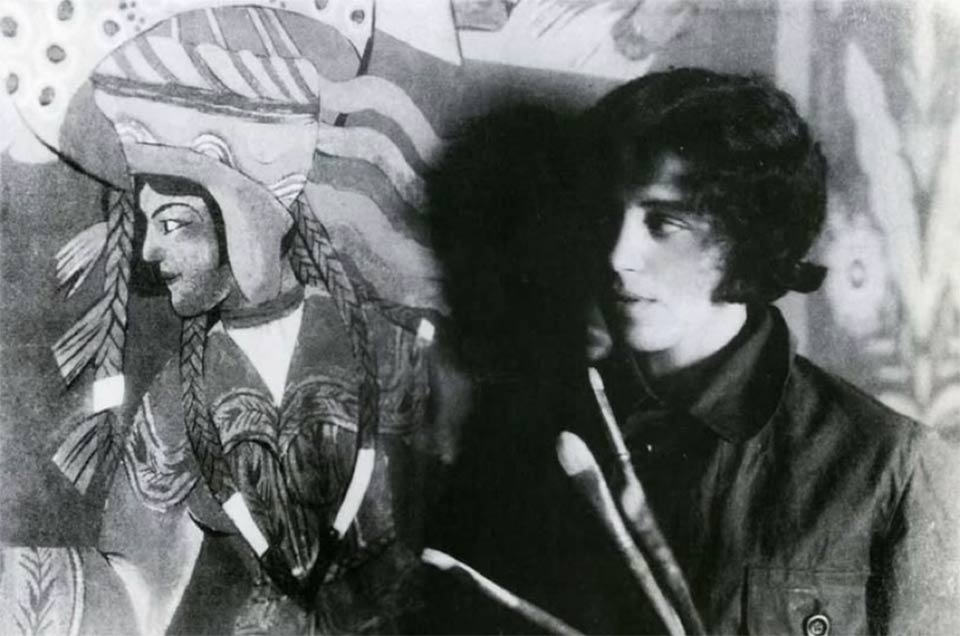
Zofia Stryjeńska (née Lubańska; b. May 13 1891, Kraków, Poland – d. February 28, 1976, in Geneva, Switzerland) – Polish painter, graphic designer, illustrator, stage designer, a representative of Art Déco style. Along with Olga Boznańska, Maria Werten, and Tamara de Łempicka, she was one of the best-known Polish women artists of the interwar period.
She first studied at various academies and studios in Kraków. In 1911 entered the Academy of Fine Arts in Munich, assuming identity of her brother Tadeusz Grzymała Lubański (the academy did not accept women at the time). She was among 40 admitted from around 200 applicants.
In 1916 she married Karol Stryjeński (1887-1932), an architect, print-maker, sculptor, publicist, and professor at the Academy of Fine Arts in Kraków. They had three children. Stryjeńska met with great success in the period following her marriage and the apogee of her career came in 1925 when she was awarded the Grand Prix at the International Exposition of Modern Industrial and Decorative Arts in Paris. She belonged to the art movement known as Rytm– one of only three women members with Maja Berezowska and Irena Pokrzywnicka– both represented in the art collection of the PMA.
Stryjeńska’s work is characterized by a lively temperament, vibrant palette, and confident draftsmanship, a distinctive painting style evidenced in a creative interpretation of traditional Polish folkloric motifs, specifically those of the Zakopane region, which emphasized line and flat color areas. Her compositions are genre scenes–views of everyday life–incorporating strands of folk customs, legends, and Old-Polish literature.
Zofia Stryjeńska was one of the most acclaimed artists in Poland during the interwar period and a chief proponent of the Art Deco style prevalent at the time. She had a colorful personality–a woman of the avant-garde with a quick intelligence, a winning charm, and a sharp sense of humor. The press dubbed her the “Princess of Polish Painting”.
For a number of years Stryjeńska was among the most honored artists in Poland. In 1930 the Polish government bestowed on her its uppermost award, Polonia Restituta, and in 1936 the Polish Academy of Literature awarded her the Gold Academic Wreath. Her works consistently participated in international exhibitions. She worked at a prodigious pace and was celebrated with awards in many countries, including the French Legion of Honor Cavalier’s Cross.
Even though she achieved fame for a while – she never achieved financial success. Many of her diary entries describe financial struggles, something she had to face pretty much all her life, whether it was when she lived in Poland, France or Belgium.
When she finally settled in Geneva, she lived a lonely life, ashamed of being unable to speak French well. She was diagnosed with schizophrenia and died in 1976.